
Who’s Protecting the Student-Athlete?
The Case for Agent Regulation in College Athletics


Over the past several years, as the Athletic Director at LMU, I have heard of situations in which student-athletes were in tears. Not because they wanted to leave, but because they felt they had no choice.
The pattern is consistent. A young person arrives on campus, adjusts well, grows athletically and academically, and builds genuine relationships with their coaches and teammates. They and their head coach develop a bond that extends beyond sports, marked by conversations that have nothing to do with wins and losses and by trust built through genuine effort and time.
They are not seeking an exit. Everything they say and do shows they want to stay.
Then the agent gets involved. In several cases at LMU, we’ve found that an agent had been undermining the program from the start, providing the student-athlete and their family with false information and promises of a larger payout elsewhere. By the time the matter surfaces, the decision has already been finalized by everyone except the person whose name is on the jersey.
They enter the NCAA transfer portal.
I have personally witnessed this more than once. This is not just an LMU problem. California has some of the strongest athlete-agent laws in the country. The Miller-Ayala Act requires agents to register with the Secretary of State and post a $100,000 surety bond before representing anyone. Yet those protections vanish the moment a call comes in from an unregistered agent shopping a player across state lines.
To be clear: student-athletes have every right to earn NIL income and to transfer when it genuinely serves them. The issue is not athlete mobility. The issue is conflicted representation by people who profit from student-athlete movement without sharing any of the risk.
Tracking the financial details explains why. An agent earning 15% on a $200,000 revenue-share deal earns $30,000. If that student-athlete transfers to a program with a $400,000 deal, the agent’s earnings rise to $60,000. The student-athlete relocates, hopes credits transfer, and adjusts to a coaching staff that recruited them based on roster needs rather than a long-term relationship. The agent doubles the commission without bearing any of those consequences.
Consider the reality behind the agent’s windfall: A student who had been experiencing genuine growth across academics, social life, and sports. Coaches who had invested in those relationships beyond the court. Agents who saw transactions rather than people. This is not a proper representation. It is a conflict of interest disguised as a LinkedIn profile.
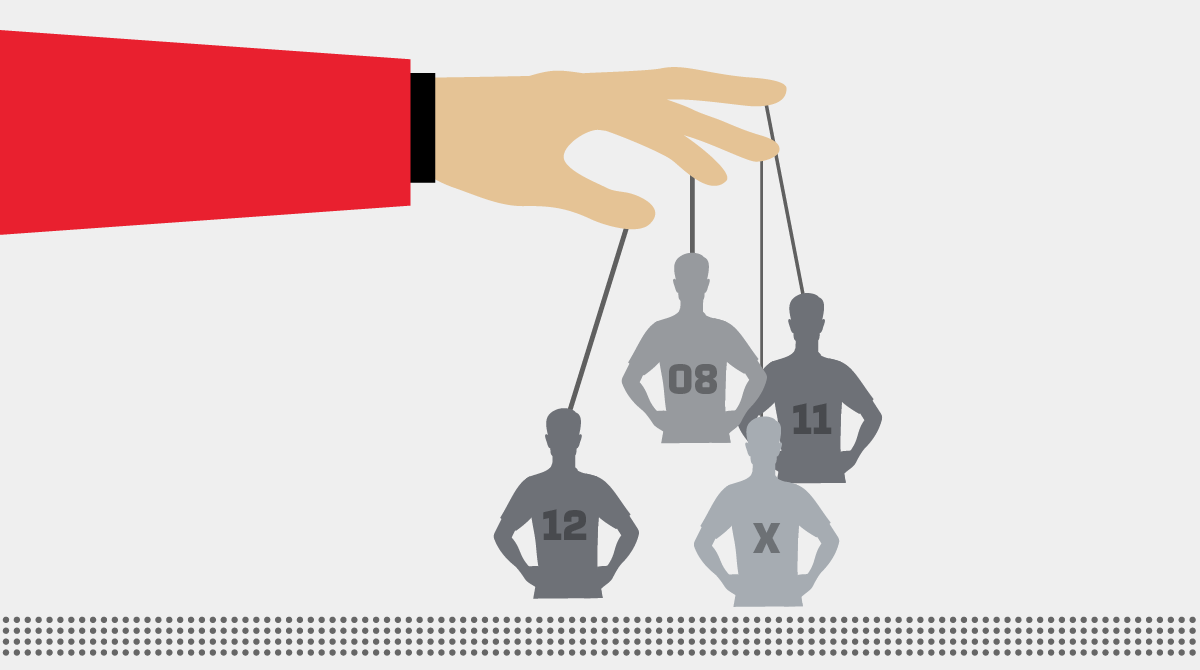
These stories are not outliers. In the 2025–26 season, $932.5 million was spent on NIL in college basketball alone, transforming the transfer portal from an opportunity into a marketplace. Many agents routinely charge 10% to 20% of a student-athlete’s NIL contract, often from 19-year-olds who have never seen one. Compare that to professional leagues: the NFL caps agent fees at 3%, the NBA at 4%, and the NHL at 5%. College student-athletes have no equivalent protection.
There is a term for what is happening in the transfer portal: churning. The SEC (Securities and Exchange Commission, not the Southeastern Conference) defines churning as a broker engaging in excessive activity in a client’s account, chiefly to generate commissions for the broker rather than to serve the client.
We already know how to address this. Financial advisors must register, disclose conflicts of interest, and act as fiduciaries. Real estate agents must be licensed and bonded. Forty-three states have adopted some version of the Uniform Athlete Agents Act. Yet when an agent calls a coaching staff about a student-athlete they are shopping, it is rare for anyone to verify registration or bonding.
Congress can fix this without a comprehensive college sports bill. Modernize and enforce SPARTA (the Sports Agent Responsibility and Trust Act, on the books since 2004 but largely dormant) by requiring mandatory registration, conflict-of-interest disclosure, a reasonable fee cap, and real penalties. In January 2026, the FTC sent letters to 20 Division I institutions about agent compliance, the first significant federal signal under the statute. That momentum should become law.
The student-athletes who sat in our coach’s office, reluctant to leave, deserved agents whose primary duty was to them, not to the next deal. So do all student-athletes navigating this market today. NIL is a billion-dollar industry. It is time to regulate it as one.